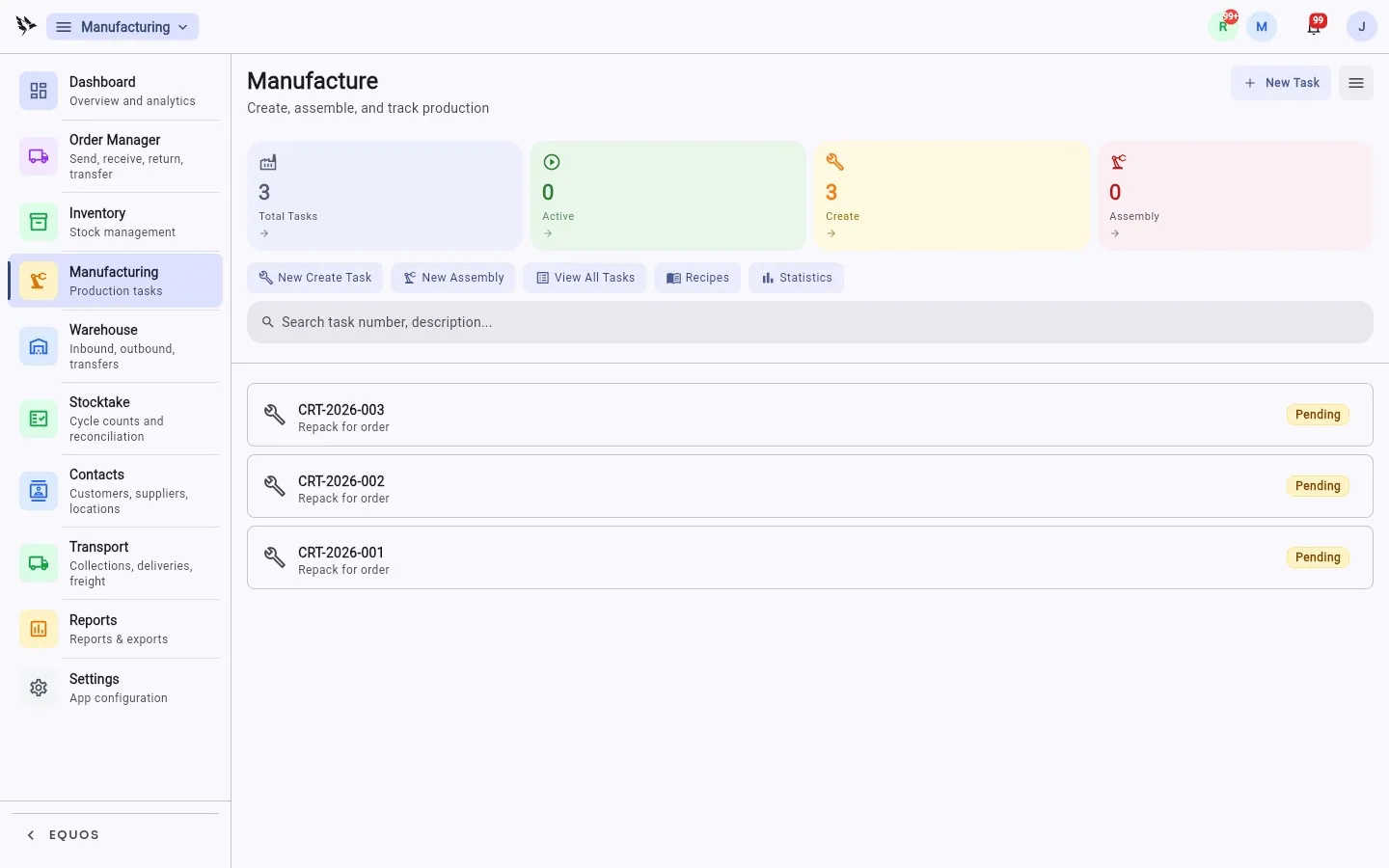
What it does
You see exactly what went in and what came out. Every batch, every step, fully traceable. When a product leaves your facility, you know its entire history — from raw inputs to finished goods.
Common production runs don’t start from scratch. Your team reuses what they’ve already figured out. Save the recipe once, use it again. Less setup, fewer errors, faster turnaround.
You know how long things take and who worked on them. Not from timesheets filled in at the end of the week — from the work itself. Clock in, do the work, clock out. The record builds itself.
If a customer ever asks where something came from, you can follow the thread all the way back. Which batch, which inputs, which production run. Full traceability, without the overhead of a system designed for a factory floor you don’t have.
How it works
You start with a recipe — the inputs, the expected output, the steps your team follows. Save it once. Next time, it’s ready to go. Your team selects the recipe, confirms the batch size, and begins.
As work happens, time is captured naturally. Your team clocks into a task, does the work, and clocks out. The record builds itself — no timesheets, no end-of-day guesswork. You see who worked on what and for how long.
Raw materials are consumed as the batch progresses. Finished goods appear in your stock when the run completes. The inputs and outputs are linked — always traceable, always auditable.
When the batch is done, its full history is already written. Every input, every person, every minute. If someone asks about a product six months from now, the answer is already there.
Breaking down bulk
Not all production starts from raw ingredients. Sometimes you receive a bulk delivery — a pallet of product that needs to be divided into smaller units, repacked, or labeled for dispatch. This is breaking down, and EQUOS tracks it the same way it tracks making.
You create a break-down task, specify what came in and what goes out. The system links the parent batch to each resulting unit. If you later need to trace where a retail unit came from, the thread runs back through the original bulk delivery.
It’s repacking with full traceability — every split, every repack, every relabel captured and connected.
More on why that middle step is where traceability quietly breaks: breaking down bulk without losing the thread.
What it doesn’t do
It doesn’t monitor machines or production lines in real time. It’s for tracking work done by people, not controlling equipment. If you need to talk to a PLC, this isn’t the tool.
It won’t plan your production schedule. It shows what’s happening and what’s been done. The planning is yours — this gives you the information to plan well.
It doesn’t manage quality certifications or compliance workflows. Your quality processes stay yours to run. This tracks the production. You ensure the quality.
Connected to
Production consumes raw materials from your inventory and delivers finished goods back — stock levels adjust as batches progress, without anyone updating numbers by hand. Completed products flow naturally into your warehouse, ready to be picked, packed, and shipped against incoming orders.